


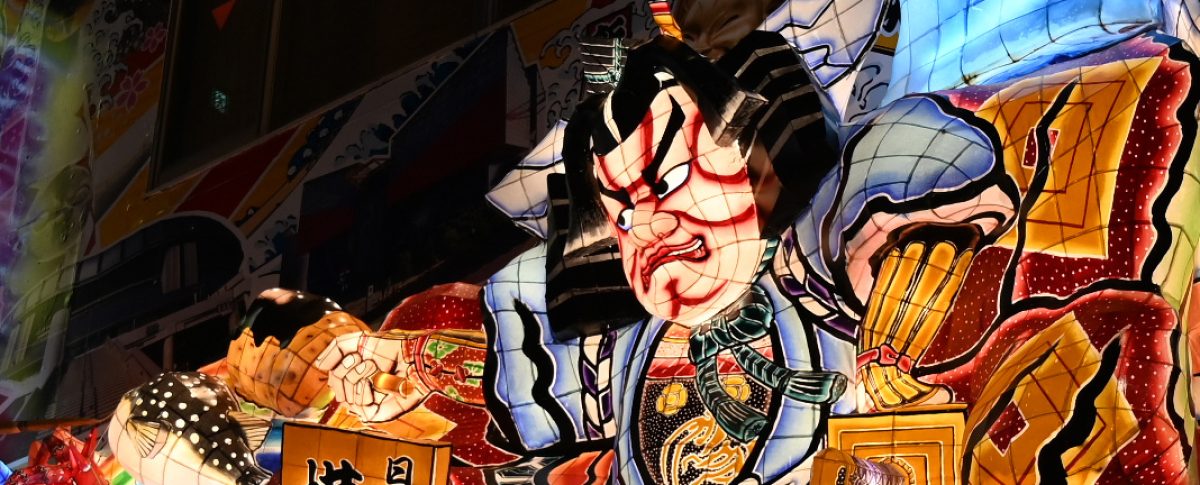


While many people face difficulties growing up, few of us have faced abandonment at sea by our deity parents because we were born without any bones. Fortunately, Ebisu was the happy-go-lucky sort who could turn lemons into lemonade.


Rescued by a fisherman who subsequently adopted him as his son, Ebisu miraculously grew bones and developed a passion for fishing. Even as an adult, no one ever saw him without a fishing rod in one hand and a fish in the other.
Though partially deaf and slightly disabled with a limp, Ebisu always maintained a positive outlook despite his hardships and difficulties. For this reason, he continues to enjoy widespread appeal in Japan as the Shinto deity of fortune and prosperity.
Ebisu is also the only Japanese deity among the Seven Gods of Fortune and is often seen with his buddy Daikokuten, the Buddhist deity of fortune and households. Being the swell guy that he is, many Japanese companies use his likeness to market their products, including beer.


Since the early days of the Heian period (794 to 1185), Ebisu has made his home at the Nishinomiya Shrine in Nishinomiya, Hyogo. The Nishinomiya Shrine is the head shrine for around 3,500 shrines of the Ebisu sect nationwide.
Toka Ebisu Festival
If truth be told, inside every Kansai person beats the heart of a merchant because no other region in Japan prays with greater devotion to the deity Ebisu than the people of Kansai. That fervor is most easily seen at the regions’ semi-annual bargain sales and the Toka Ebisu festivals held in Kansai over a four-day period in early January.
Toka is the Japanese word for the 10th day, which marks the most auspicious day for paying homage to Ebisu. The bulk of the celebrations center on the three major Ebisu shrines in Kansai of Imamiya Ebisu Shrine in Osaka, the Kyoto Ebisu Shrine in Kyoto, and the Nishinomiya Shrine in Nishinomiya. Like jealous young children competing for their mother’s attention, each shrine tries to outshine the other two for the crown of best festival.
Imamiya Ebisu Shrine


Osaka has been a commercial hub in Japan since ancient times and the popular greeting among friends here is “Mokamatta ka,” meaning “Are you making a lot of money?” Given this nature of Osaka people, it is hardly surprising that the shrine can fetch up to as much as 200 dollars for a lucky fukuzasa bamboo branch loaded with amulets and charms.
Many of the people who worship at this shrine are small business owners and employees who come in the hope that Ebisu will tame the animals spirits for this year, and it is this shared desire that generates a level of excitement in the crowd that rivals major sporting events.
Though suspended due to the coronavirus in 2021 and 2022, a parade, food stalls, and visits by local geishas are some of the special attractions of the Imamiya Ebisu Shrine.
Kyoto Ebisu Shrine


Located in the Gion district in Kyoto, the Kyoto Ebisu Shrine draws great support and love from the surrounding merchants and proprietors of local bars and restaurants. Unlike Osaka, its lucky fukuzasa bamboo branches are more reasonably priced, blessed by shrine maidens performing live kagura dances, and handed out by maiko geisha apprentices. Top that Imamiya Ebisu Shrine!
Also, the festival runs for an additional fifth day and includes many Japanese traditions and practices. Unfortunately, some events and activities, like the participation by maiko geisha apprentices, had to be curtailed again this year because of COVID-19. Nevertheless, city officials showed great pluck in allowing street food vendors to set up stalls on the street leading to the shrine’s main gate. In doing so, they signaled another step forward toward some sense of normalcy.
Nishinomiya Shrine


Just mentioning that the Toka Ebisu festival in Nishinomiya has a performing monkey should be sufficient for its declaration as Ebisu festival champion, but its haunted house, game stalls for children, and sweet amazake beverages make it an enjoyable place for the whole family to pray for good fortune. And did I mention it had a performing monkey?
Not only does the Nishinomiya Shrine attract enormous crowds during Toka Ebisu, but it is also a major shrine in Hyogo where people can stroll its large grounds year round to enjoy a moment of peace and serenity.
Celebrations for Toka Ebisu at these three major shrines and smaller ones like them reveal much about the tremendous energy, vitality, and competitive spirit of the Kansai people and are a part of the must-see Kansai events in January.


